The Scaffolding Ringlock System has become one of the most widely used modular access solutions in construction because it solves a real jobsite problem: teams need faster assembly, stable loading, and fewer loose parts. In many projects, Ringlock System Scaffolding is chosen over tube-and-clamp setups because it can reduce erection time and improve part standardization. For crews comparing Cuplock Scaffolding main components, modular scaffolding for building projects, and heavy-duty ringlock scaffolding system options, the value is simple: fewer errors, faster workflow, and clearer load control.
Modern construction sites face three common pain points: limited labor, tight schedules, and strict safety checks. A system scaffold helps with all three. Instead of cutting and fitting many loose tubes, workers connect standardized parts in a fixed pattern. This makes planning easier, training shorter, and inspections more consistent. In practice, that means fewer missing pieces, fewer setup mistakes, and less downtime when work moves from one floor to the next.

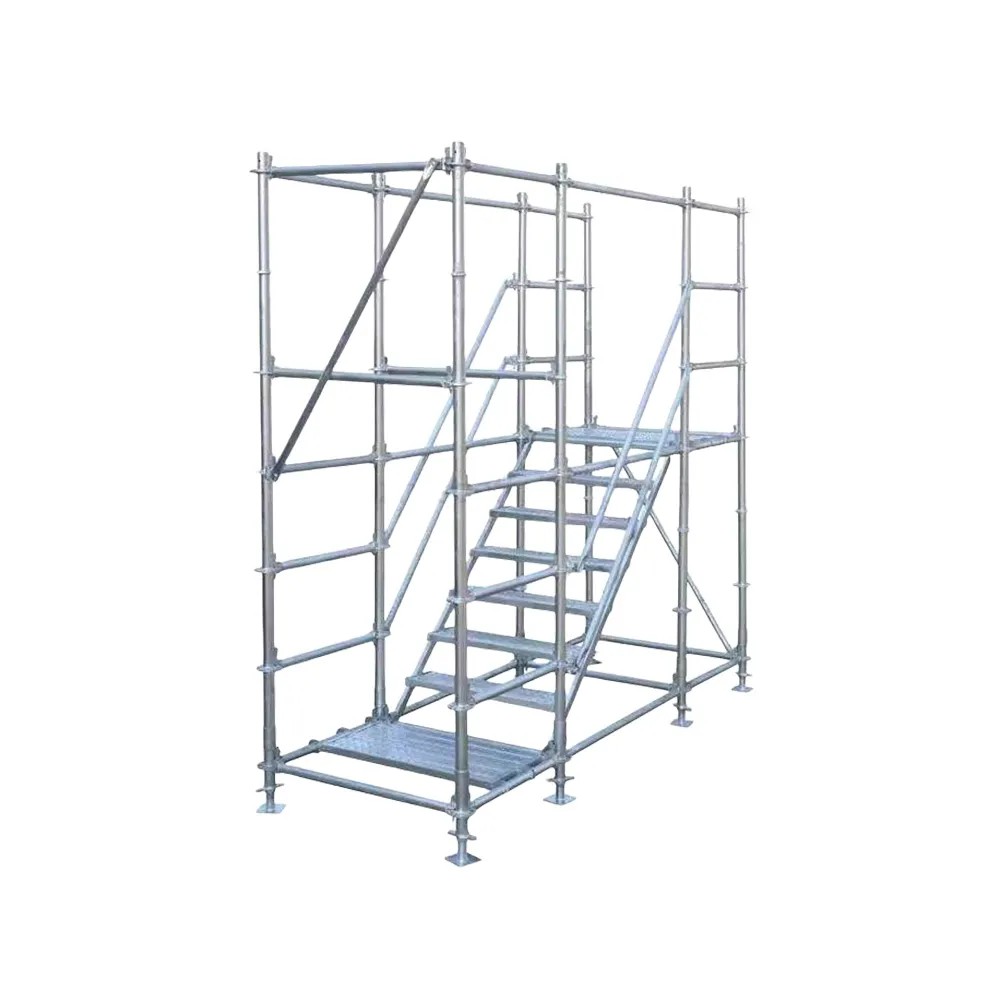
Ringlock System Scaffolding is a modular scaffold system built with a vertical standard, horizontal ledger, diagonal brace, and a rosette-style connection point. The word “ringlock” comes from the round rosette on the standard, which lets multiple components connect at set angles.
A ringlock scaffold is a prefabricated modular support structure used to create safe working platforms, access routes, and temporary support for construction, maintenance, and industrial work.
Unlike older systems that depend heavily on loose clamps, Ringlock uses a fixed node connection. That improves repeatability and helps teams build the same structure in a more controlled way.
Long-tail keyword use:
This structure is especially useful for ringlock scaffold system components, ringlock modular scaffolding supplier, and ringlock scaffold for commercial construction projects.
Although this article focuses on Ringlock, many buyers also compare it with Cuplock. So it helps to know the answer to the common question: What are the main components of Cuplock Scaffolding?
Standards (verticals)
Main upright tubes that carry the load.
Ledgers (horizontals)
Connect standards and form the working frame.
Top cups and bottom cups
The cup-locking mechanism that secures ledger blades.
Ledger blades / node joints
Fit into the cup system and lock in place.
Transoms
Support scaffold boards and help stabilize the platform.
Braces
Increase rigidity and reduce side movement.
Base jacks and adjustable heads
Help with leveling on uneven ground.
Scaffold boards / planks
Provide the working surface.
Buyers often compare Cuplock and Ringlock because both are modular and efficient. Cuplock uses a cup-and-blade locking method, while Ringlock uses a rosette and wedge-head connection. The choice often depends on:
Practical takeaway:
If you are asking “What are the main components of Cuplock Scaffolding?” because you want to compare systems, Ringlock is often favored for projects with many angles, irregular layouts, and repeated assembly cycles.
The working principle is straightforward:
Ringlock’s node-based connection improves consistency. In many jobsite workflows, standardized connection points reduce guesswork and help crews follow the same assembly sequence. That can lower installation errors and support safer use under supervision.
Instead of saying “easy to use,” it is better to say:
These are the terms site managers and procurement teams actually care about.
Image source: DYNAST Metal product reference. Useful for understanding the difference between scaffold component systems and connection nodes.
Ringlock is important because it addresses three industry needs at the same time:
In modular construction, time saved during assembly can directly improve schedule control. A standardized scaffold system can reduce repeated measuring and fitting.
A rigid, node-based scaffold helps create clearer load routes. That supports safer platform design when it is installed correctly and inspected by trained personnel.
Workers do not need to handle as many separate clamps and loose fittings. That simplifies training and reduces small-part loss.
Industry safety guidance from organizations such as OSHA and HSE consistently stresses proper inspection, correct assembly, and load control for scaffold use. While exact productivity gains vary by project, modular systems are commonly selected because they can reduce setup steps compared with traditional tube-and-coupler methods.
Ringlock is used in many fields because it is flexible and strong.
Used for external access, façade work, plastering, painting, and concrete support.
Used in refineries, power plants, shipyards, and factories where structure shapes are complex.
Useful for curved or uneven structures, where standard scaffold geometry is not enough.
Can be adapted for temporary platforms, viewing stands, and load-bearing access structures.
Used in projects that need corrosion-resistant materials and stable modular access.
Helpful for old buildings where walls, balconies, and roof lines are irregular.
Each part has a fixed role, which helps planning and inventory control.
Because connection points are predefined, crews can work more systematically.
The rosette node supports multi-directional connections, which is useful for complex geometry.
Ringlock works well for repeating floor-to-floor scaffolding on tall buildings and industrial sites.
A standard layout makes checks more straightforward for supervisors and safety teams.
When made with proper steel grade and hot-dip galvanizing, the system can resist corrosion better than painted-only parts.
Many professional suppliers use:
This is more useful than saying “high quality,” because it tells buyers what they are actually getting.
Many buyers ask whether Ringlock or Cuplock is better. The right answer depends on the project.
| Item | Ringlock | Cuplock |
|---|---|---|
| Connection type | Rosette + wedge head | Cup + blade |
| Flexibility | High | Medium |
| Typical use | Complex layouts, industrial work | Regular layouts, general building |
| Learning curve | Moderate | Moderate |
| Main strength | Multi-angle adaptability | Fast repetitive erection |
If you are comparing What are the main components of Cuplock Scaffolding? with Ringlock, the key difference is the locking node design. That design affects speed, flexibility, and the kind of project each system fits best.
A buyer should not focus only on price. These are the real checkpoints:
Ask for steel grade and mill certificates.
Look for clean, even welding at node points.
Hot-dip galvanizing is often preferred for long-term outdoor use.
Make sure standards, ledgers, and braces match the same system size.
Request test reports or technical load data.
A stable supplier should deliver identical parts across batches.
You may need replacement parts, technical drawings, or loading advice.
Professional buyers often compare supplier data with scaffold guidance from recognized safety authorities and engineering standards. That helps reduce risk in procurement and site use.
If you want to explore a supplier option, DYNAST can be a useful brand to review because buyers often look for:
You may want to contact DYNAST if:
Ask for:
It creates a modular access and support structure for construction and industrial work. The main advantage is standardized node connections.
The main components are standards, ledgers, top cups, bottom cups, transoms, braces, base jacks, and scaffold planks.
Not always. Ringlock is usually better for complex layouts and flexible angles. Cuplock is often used for more regular, repetitive structures.
It is widely used in building construction, bridge work, industrial maintenance, marine projects, and renovation jobs.
Because it can reduce setup complexity, improve part control, and support safer standardized assembly.
Check steel grade, welding quality, galvanizing, load reports, compatibility, and after-sales support. A brand like DYNAST can be a good place to start your comparison.
If you are planning a project, start with the drawing, then match the scaffold system to the site shape and load needs. Read the product guide, confirm the component list, and compare Ringlock with Cuplock before ordering. If your project has many angles or repeated assembly cycles, Ringlock System Scaffolding is often the more practical choice.
For a deeper review, ask for:
If you want, I can also turn this into: